Industry standard should mean operational focus.
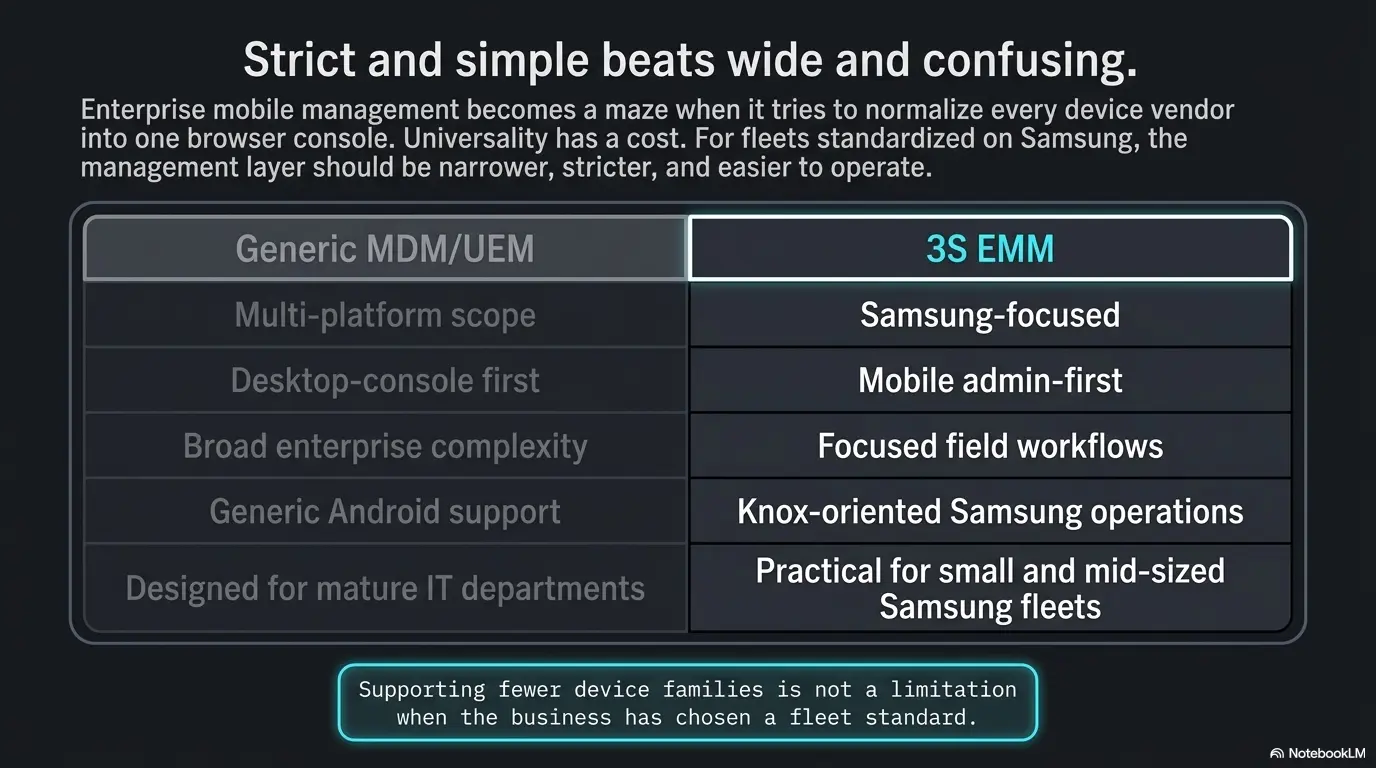
Enterprise mobile management becomes complicated when it tries to normalize every device vendor, every policy gap, every OEM behavior, and every exception into one browser console. That model may look universal, but universality has a cost: policy design becomes broader, support paths become slower, and the admin experience becomes more abstract than the devices in the field.
3S EMM takes the opposite position. For many corporate Android fleets, Samsung is the practical enterprise standard. Samsung devices are widely available, familiar to users, and backed by the Knox platform. When the fleet is standardized on Samsung, the management layer can be narrower, stricter, and easier to reason about.
Samsung is the source of Samsung-specific Knox control.
The key difference is Knox. Samsung publishes the Knox SDK for developers who need to manage Samsung Android mobile device features such as apps, accounts, connections, customization, device settings, security, VPN settings, and more. Samsung also publishes Knox Service Plugin, an OEMConfig-based path for deploying Knox Platform for Enterprise policies through compatible Android Enterprise UEM environments.
That matters because Samsung-specific enterprise control does not come from generic Android alone. If a customer wants the policy depth associated with Samsung Knox, the product strategy should be honest about the source of that control. 3S EMM does not pretend that every Android manufacturer offers the same enterprise surface. It focuses on the producer that provides the Knox SDK, Knox Platform for Enterprise, and Knox Service Plugin path for Samsung enterprise customers.
Strict and simple beats wide and confusing.
EMM policy should not feel like a maze. In a Samsung-only product, the policy model can be designed around the real capabilities that matter for Samsung Device Owner deployments. The admin does not need to guess which settings apply to which OEM, which features silently degrade, or which paths only work on selected devices.
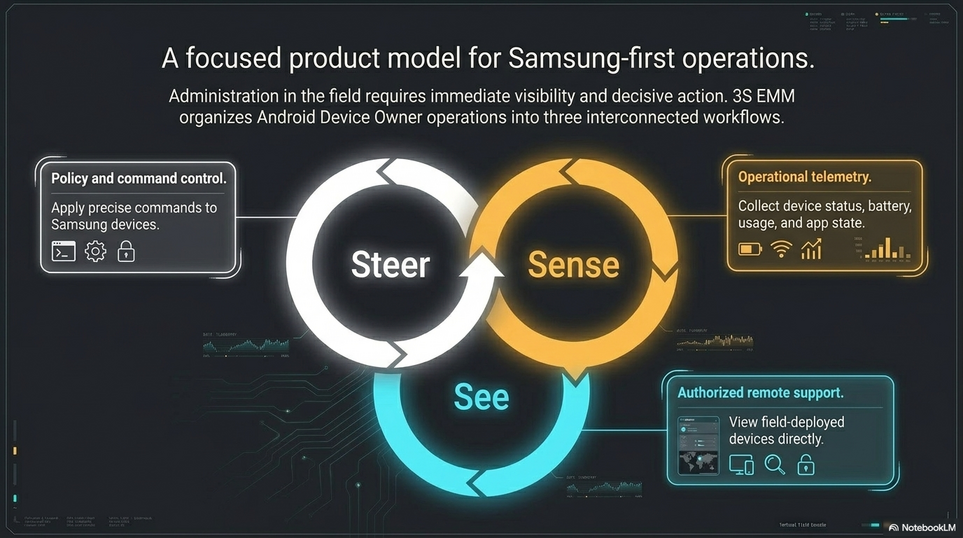
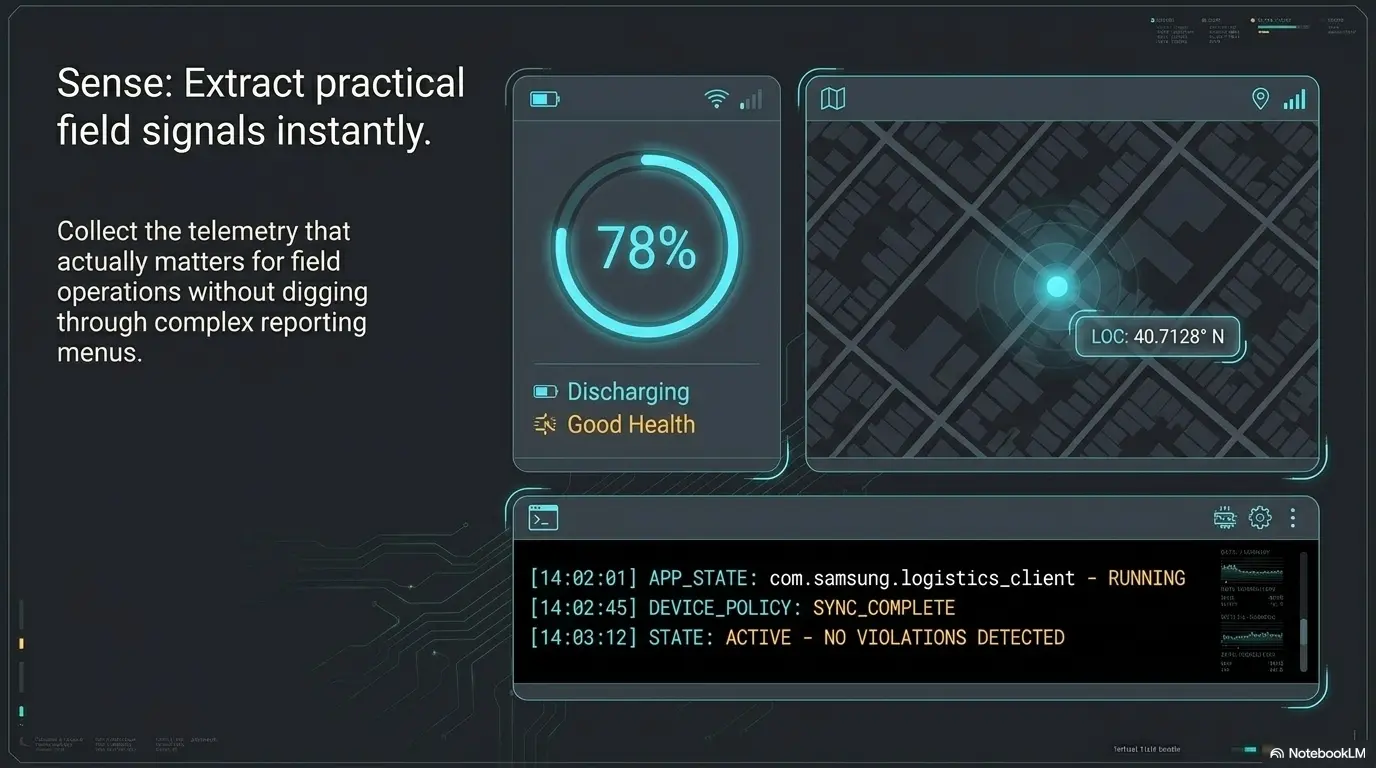
Strict policy is not about adding more switches. It is about reducing ambiguity. A mobile fleet needs clear enrollment state, clear remote viewing state, clear telemetry, clear support controls, and clear policy enforcement. The product should make the correct action obvious.
Mobile admin is the new EMM interface.
The traditional browser-based EMM console was built for desk administration. But many mobile fleets are not managed from desks. They are managed by operators, supervisors, field support, kiosk owners, logistics teams, retail teams, and service teams who already work from phones and tablets.
That is why 3S EMM treats the mobile admin app as a first-class product surface. Admins should be able to manage on a tablet, use touches and swipes, open a device, inspect telemetry, apply strict policy, and start remote support without waiting to return to a desktop console.
Browser consoles will still exist in enterprise software. But for mobile device operations, the browser-only EMM admin model is becoming history. The admin interface should live close to the devices it controls.
Remote control belongs in the workflow.
Support is not only policy delivery. Real fleets need visibility. They need remote viewing, device status, movement and activity signals, and a way to understand what is happening on a managed corporate device without turning support into a long phone call.
When Samsung is the standard and Device Owner enrollment is the model, 3S EMM can design the support experience around that reality. The goal is not to reproduce a generic desktop console on a smaller screen. The goal is to make the admin workflow direct: see the device, understand the state, act through simple controls, and keep the fleet moving.
The 3S EMM model.
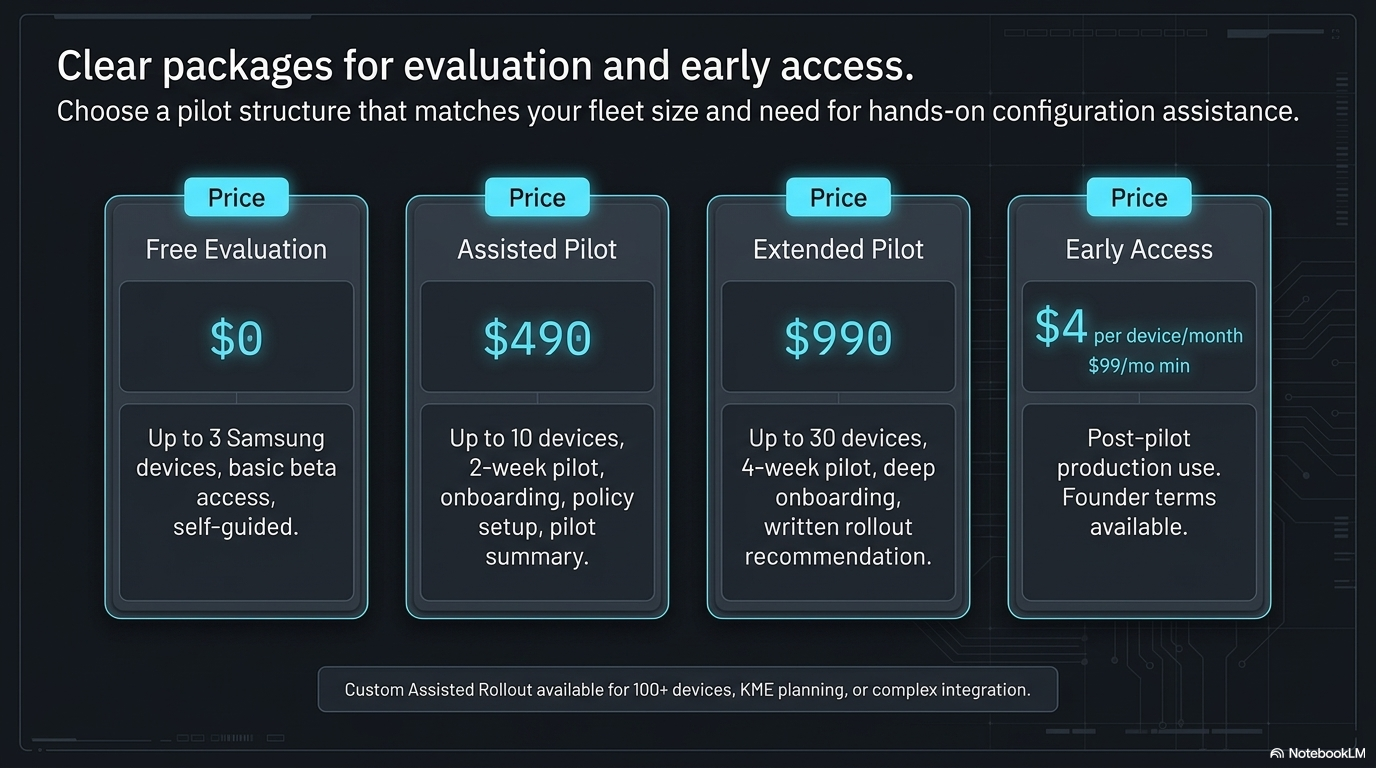
3S EMM is focused on Samsung enterprise fleets at $20 per device / year. It does not start from the assumption that EMM must support every platform before it can be useful. It starts from a narrower operating truth: many organizations can move faster when they standardize hardware, standardize enrollment, and standardize policy around one strong Android enterprise ecosystem.
That is the leverage of Samsung-only EMM: less generic surface area, deeper Knox alignment, simpler mobile administration, and a product that is built for the way managed Android devices are actually supported in the field.
Start testing the 3S EMM workflow.
Standardize hardware, standardize policy, and simplify mobile administration with a Samsung fleet at $20 per device / year.